My 3-Year-Old Won’t Listen Unless I Yell
Do you have to yell at your 3-year-old for them to listen? This is why yelling seems to work and what you should do instead.
You ask nicely. Nothing happens.
You keep saying the same thing. Nothing yet.
Then your voice gets higher than you meant it to, and all of a sudden, your 3-year-old moves.
They answer. They pay attention. They do things.
And almost right away, the guilt comes.
You're not the only one whose 3-year-old only listens when you yell. This is a pattern that many parents go through when their kids are in preschool. It doesn't usually start on purpose. It builds up slowly over busy mornings, long afternoons, and the pressure to keep things going.
The real question is not if yelling works right now. It's what it teaches over time and why it seems to work.
Why Yelling Works
Kids who are three years old are very focused on what they're doing. When they play, they are very focused. It takes mental flexibility that is still developing to switch from play to instruction.
When you calmly say, "Put your shoes on," from across the room, they may not think it's important right away. It fits in with the background.
But when you change your tone, their nervous system reacts right away. A loud voice means intensity. It makes you feel stressed. Their body reacts before their brain does.
That response might look like obedience. But it's often just a reflex.
If you give your child calm instructions and then louder ones over and over, they will start to expect the louder ones. They learn that the first request is not necessary, but the second one is.
Such behavior isn't manipulation. It's conditioning.
The Cycle That Grows
In a lot of homes, the pattern stays the same.
You give an order.
Your child is late.
You say it again.
You get worse.
They answer.
Your child's brain will connect the dots after hearing it enough times. The louder tone is the real signal.
To break this cycle, you need to be consistent more than intense.
What to Do Instead of Yelling
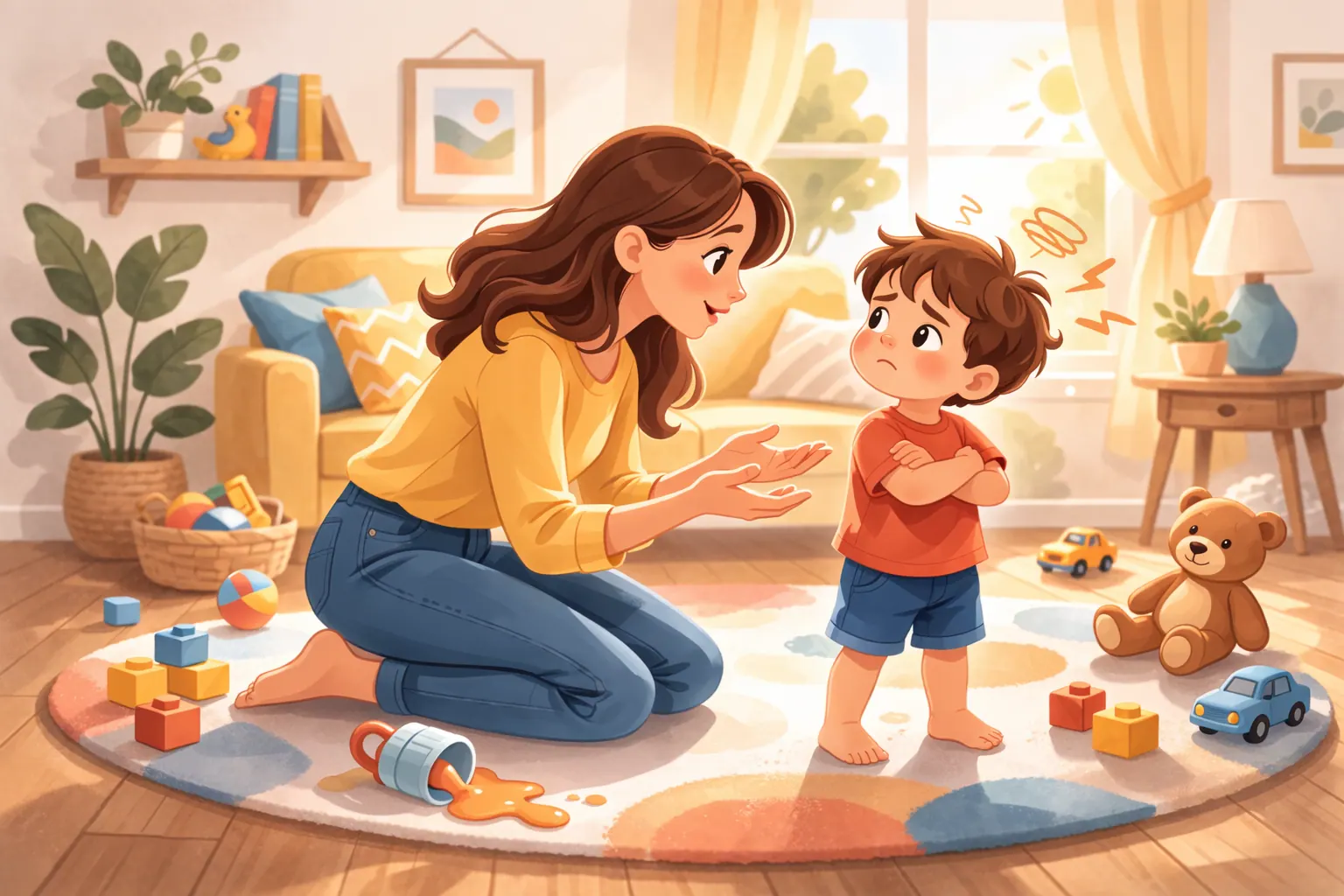
The shift starts with closeness. Walk over instead of calling for help from another room. Get down to your child's level. Say their name and wait for them to look at you. That little break really grabs their attention.
Then give a clear order.
"Put your shoes on now."
Make it short. Preschoolers understand short sentences better than long ones.
If nothing happens after a short pause, keep going calmly.
"I'll help you if you don't start."
Then help. Gently lead them to the task. No more frustration. No speech. Just keep moving.
At first, your actions might feel slower than yelling. You might think you're doing more work. But what you're doing is building long-term cooperation. Your child starts to understand that your first voice is important because it always leads to action.
Why Fewer Words Make Listening Better
Three-year-olds don't have very good impulse control or working memory. A lot of what we say when we're stressed out doesn't make sense.
Language that is clear and simple works better.
Don't say, "How many times do I have to tell you?" Say something direct, like, "Please listen." It shows authority without making people angry.
Not the amount of things you do, but the way you do them builds authority.
The Real Problem Is Often Transitions
A lot of problems with listening are really problems with transitioning. Three-year-olds have a hard time stopping something fun without warning. If they are really into playing and you suddenly tell them it's time to go, they will probably fight you.
Giving advance notice makes things go more smoothly.
"We're cleaning up in five minutes."
"One more turn, then a bath."
Preparation helps their brain get used to things. Listening gets better because the demand feels manageable instead of sudden.
What if you still yell sometimes?
You will. Being a parent is hard. Stress is growing. No one stays calm all the time.
Fixing things is the most important thing. When things are calmer, you might say, "I didn't like how I yelled before." "I'm working on speaking more calmly. "That shows how to be responsible and grow emotionally.
It doesn't make you less powerful. It builds trust.
When Should You Be Worried?
Most listening problems that happen at age three are normal for that age. Preschoolers are learning how to be independent, but they still need structure. They learn where the limits are by pushing them.
If you see signs of hearing problems, language delays, extreme aggression, or behavior that seems very different from what you see in other kids their age, you should always talk to your pediatrician.
But most of the time, the problem isn't that they don't want to listen. The way people talk to each other needs to change.
The Big Picture
It doesn't mean you don't have authority if your 3-year-old only listens when you yell. It means that your family came up with a quick fix that worked when things got tough.
You are now choosing to make something more stable.
At first, calm consistency may seem slower. You might not see any real change for days or even weeks. But over time, your child will start to listen to your quiet voice because they know that what you say will lead them somewhere they can expect.
That kind of listening lasts a lot longer than yelling ever could.