How Much Screen Time Is Too Much for a 5-Year-Old?
It can feel like you're negotiating with a 5-year-old every day when they watch TV. This useful weekly plan helps you avoid conflict, protect growth, and find balance without feeling guilty or having to follow strict rules.
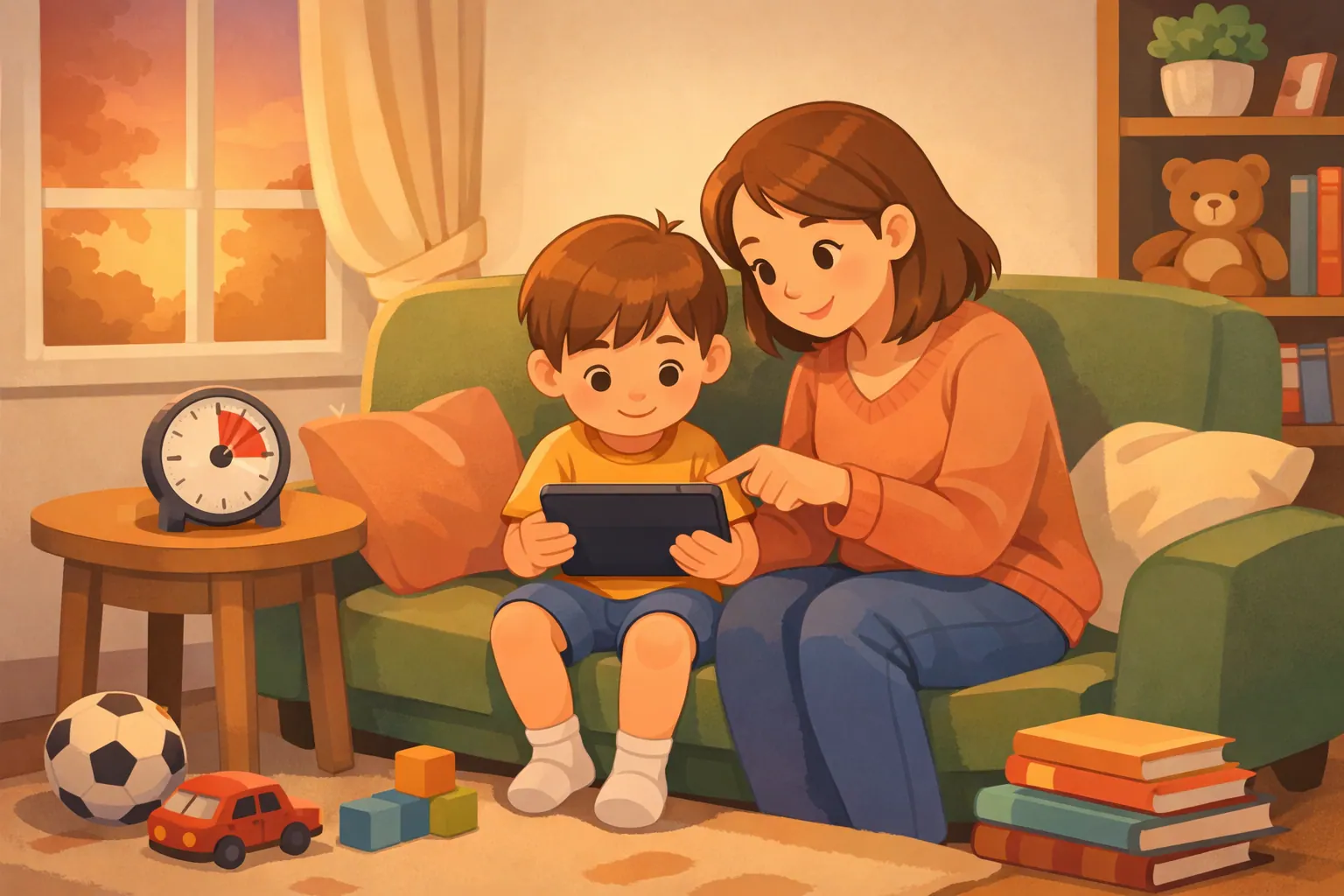
If you have a 5-year-old, you already know that screens are everywhere. Morning cartoons. After school games. A short video while you make dinner. It adds up quickly.
Then the guilt starts to set in. Am I letting too much happen? Is this bad for their brain? What happens when you turn it off that makes it so bad?
Most of the time, when parents ask how much screen time is too much for a 5-year-old, they don't just mean minutes. They want to know how to keep their child from developing without becoming the screen police.
The goal is not to have no screens. The goal is to find a balance. Let's talk about what that really means in real life.
What Happens at This Age
Five-year-olds are going through a time of quick brain growth. They are helping kids learn how to talk, control their emotions, be aware of other people, and use their imaginations. They learn best through play, movement, talking, and doing things in the real world.
A lot of experts say that kids this age should spend about an hour a day on screens that are good for them. But what matters more than the exact number is how screens fit into the whole picture.
If your child sleeps well, plays a lot, interacts with other people, and stays interested in the real world, using screens from time to time is unlikely to hurt their growth.
When screens take the place of physical activity, socializing, playing outside, or spending time with family, that's when it becomes a problem.
What Causes This
Screens are made to get people's attention. The brain's reward system lights up when it sees fast images, bright colors, music, and instant rewards. This is very strong for a 5-year-old.
Their prefrontal cortex, which helps with impulse control and transitions, is still growing. That means it really is hard to stop a fun show. It's not manipulation. It's being immature.
Kids may become more reactive when screen time is unpredictable or used as the main way to calm down. Their brain goes from being very active to being normal, and that change can be uncomfortable.
Knowing this will help you deal with limits with calm authority instead of anger.
What You Should Do Instead
Think about balance over the course of a week instead of daily limits.
A lot of families find this weekly plan helpful:
Set a limit on how much you can spend on screens each week. For instance, seven hours total for the week. That works out to one hour a day, but it lets you be flexible.
On purpose, use heavier screen days. A movie night on Friday might be fun. An extra cartoon on Sunday afternoon, maybe. That means less screen time during the week.
Set screen time limits based on routines. After doing chores, playing outside, or doing homework, it's time for screens. Not before anything else.
Don't use your screen at random times to fill every quiet moment. It's not a problem to fix boredom. It's a place where creativity can grow.
Make it clear when to stop. Put a timer where you can see it. Give a warning five minutes ahead of time. Then always follow through.
Power struggles go down when screens are predictable and not always on.
What to Say
Clear scripts help you stay calm and sure of yourself.
"After playing outside, it's time for screens." "Let's get our shoes."
"You have ten minutes left." "Turn it off when the timer goes off."
"It's hard to stop when you're having fun." "I'll help you."
"Today is not a day for screens." We can either build something or solve a puzzle.
"We save screen time for movie night on Friday."
Pay attention to the tone. Calm down. That's a fact. Not mad. Not sorry.
Tips for Avoiding
First, protect sleep. No screens for at least an hour before bed.
Don't bring devices into the bedroom. Shared family spaces cut down on overuse.
Sometimes, watch with your child. Say what you see. Co-viewing changes watching something passively into something that connects people.
Give people good choices. Art supplies, building sets, simple games to play outside, and cooking together. The less screens take over, the more appealing real life seems.
Balance yourself like a model. Kids see when adults are always on their phones.
Being consistent is better than being perfect. Your child will be fine after a rough week.
When to Get Extra Help
If your child gets very angry when screens are taken away, has trouble doing things that don't involve screens, or has trouble sleeping or paying attention that worries you, you might want to talk to a pediatrician or child development expert.
This article is not a medical diagnosis; it only gives general advice. If you're not sure, getting professional advice can help you understand and feel better.
The Big Picture
The question isn't how much screen time is too much for a 5-year-old alone.
The real question is whether screens are taking the place of play, rest, and connection.
Your child needs to move around, talk to people, use their imagination, and have limits. Screens can fit into that life in small, planned ways.
You don't need very strict rules. You need to have a rhythm.
Your child learns something much more important than screen rules when you set clear limits and stick to them. They learn how to stay balanced.